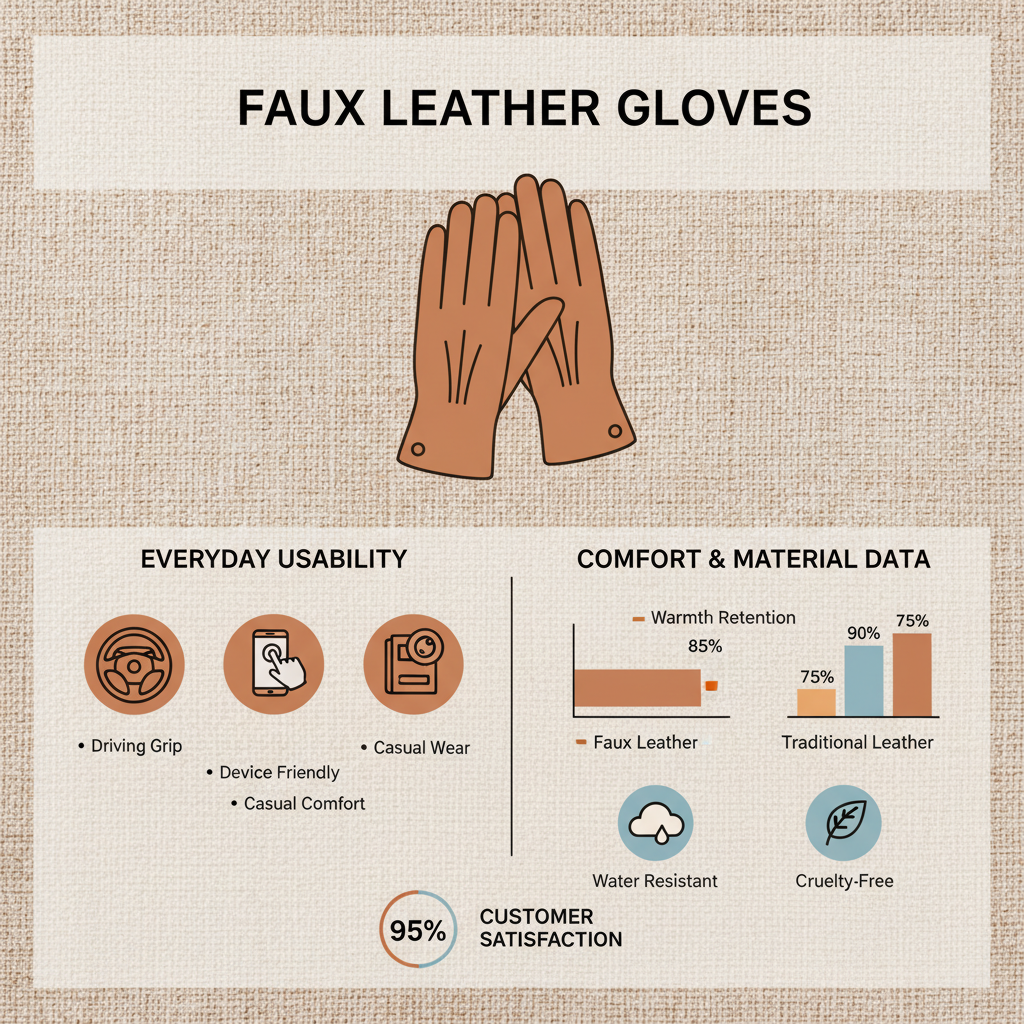
Faux leather gloves, a versatile and increasingly popular alternative to traditional leather, are gaining prominence globally. Driven by ethical concerns surrounding animal welfare, sustainability initiatives, and cost-effectiveness, the demand for these gloves is steadily rising across diverse industries, from automotive and manufacturing to healthcare and fashion. Understanding the production, properties, and applications of faux leather gloves is crucial for businesses and consumers seeking responsible and innovative solutions.
The global faux leather market is experiencing substantial growth, projected to reach significant valuations in the coming years, fueled by innovations in material science and manufacturing processes. According to industry reports, the growing vegan and cruelty-free consumer base, combined with stringent environmental regulations, are key drivers. This expansion offers opportunities for manufacturers, suppliers, and researchers to develop more sustainable and high-performance faux leather materials and applications, enhancing the overall value proposition of faux leather gloves.
The increasing accessibility and affordability of faux leather gloves are also democratizing access to protective handwear for a wider range of applications. This is particularly important in developing economies where cost is a major barrier to workplace safety. As technology advances, faux leather continues to evolve, challenging the traditional dominance of genuine leather and offering compelling benefits in terms of durability, aesthetics, and environmental impact.
Introduction to faux leather gloves
Faux leather gloves represent a significant advancement in protective handwear, offering a compelling blend of functionality, affordability, and ethical considerations. They have become a staple in various sectors, from industrial workplaces demanding robust protection to everyday use for style and comfort. The continued development of new materials and manufacturing techniques promises to further enhance the performance and sustainability of these gloves.
The versatility of faux leather gloves stems from their ability to mimic the aesthetic and tactile qualities of genuine leather, while eliminating the environmental and ethical concerns associated with animal-derived products. As consumer awareness grows and demand for sustainable alternatives increases, faux leather gloves are poised to play an increasingly vital role in numerous industries, contributing to a more responsible and environmentally conscious future.
Defining Faux Leather Gloves
Faux leather gloves, also known as imitation leather gloves or pleather gloves, are gloves constructed from synthetic materials designed to replicate the look and feel of genuine leather. These materials commonly include polyurethane (PU) and polyvinyl chloride (PVC), though newer bio-based alternatives are emerging. The core purpose is to provide a protective barrier for hands while offering a similar level of dexterity and comfort as their leather counterparts.
The connection to modern industry stems from a growing need for cost-effective and reliable protective gear. Genuine leather, while durable, can be expensive and subject to supply chain challenges. Faux leather gloves provide a consistent, readily available alternative that meets stringent safety standards and performance requirements across a wide array of applications.
Furthermore, faux leather gloves align with humanitarian needs by offering accessibility to workers in industries where cost-effective safety solutions are paramount. They play a crucial role in mitigating workplace hazards and promoting a safer working environment, particularly in regions where resources are limited.
Core Properties of faux leather gloves
The fundamental properties of faux leather gloves dictate their suitability for various tasks. A key characteristic is their resistance to water, oil, and certain chemicals, making them ideal for industries involving handling fluids or abrasive substances. The flexibility and durability of the material also contribute to user comfort and long-term performance.
Durability, specifically tear and abrasion resistance, are also critical. Modern faux leather materials are engineered to withstand considerable wear and tear, often exceeding the performance of lower-grade genuine leathers. This allows for extended use and reduces the need for frequent replacements, contributing to cost savings.
The tactile properties of faux leather gloves play a significant role in dexterity and control. Manufacturers are continuously refining materials to enhance grip and sensitivity, enabling users to perform intricate tasks with precision. The ability to customize texture and thickness allows for tailored solutions specific to individual job requirements.
Beyond these primary properties, faux leather gloves can be engineered with additional features, such as flame retardancy, static dissipation, and antimicrobial treatments, further expanding their range of applications and enhancing safety. These enhancements cater to specialized needs in demanding environments like welding, electronics manufacturing, and healthcare.
Key Performance Indicators for faux leather gloves
Evaluating the performance of faux leather gloves involves considering several key indicators. Abrasion resistance, measured in cycles, determines how well the gloves withstand rubbing and wear. Tensile strength, indicating the material’s resistance to tearing, is crucial for demanding applications.
Puncture resistance, assessed by the force required to penetrate the material, is vital in environments with sharp objects. Chemical resistance, tested against specific substances, dictates suitability for handling hazardous materials. These KPIs are often standardized by organizations like ANSI and EN to ensure consistent quality and safety across different manufacturers.
Performance Comparison of faux leather gloves Materials
Real-World Applications of faux leather gloves
Faux leather gloves find applications across a broad spectrum of industries. In manufacturing and automotive, they provide essential hand protection during assembly, welding, and handling of parts. In healthcare, they are used as barrier protection against contamination and infection, ensuring hygiene and safety for both patients and medical personnel.
Their use extends to construction, where they offer protection from abrasions, impacts, and weather elements. The food processing industry utilizes faux leather gloves to maintain sanitary conditions and prevent cross-contamination. Even in the fashion industry, faux leather gloves are increasingly popular for their stylish appearance and ethical appeal.
Advantages and Long-Term Value
The advantages of faux leather gloves are multifaceted. From a cost perspective, they are significantly more affordable than genuine leather, making them accessible to a wider range of businesses and individuals. Sustainability is another key benefit, as they eliminate the environmental impact associated with livestock farming and tanning processes.
The long-term value lies in their durability, requiring less frequent replacements, and their consistent quality control. Furthermore, their versatility and adaptability to various applications make them a smart investment for businesses seeking comprehensive hand protection solutions. The ethical considerations also resonate with increasingly conscious consumers.
Future Trends in faux leather gloves
The future of faux leather gloves is being shaped by several exciting trends. The development of bio-based faux leather materials, derived from plant sources like mushrooms and pineapple leaves, is gaining momentum, offering truly sustainable alternatives. Advancements in nanotechnology are enhancing the performance characteristics of faux leather, improving durability, flexibility, and resistance to wear and tear.
Digital printing and customization technologies are enabling manufacturers to create tailored faux leather gloves with unique designs and features. Furthermore, integration with smart technologies, such as sensors and conductive fibers, could lead to the development of smart gloves with enhanced functionality and data collection capabilities.
Summary of Trends Impacting faux leather gloves Performance
| Trend Category |
Impact on Durability |
Impact on Sustainability |
Investment Required |
| Bio-based Materials |
7/10 |
9/10 |
Medium |
| Nanotechnology Integration |
8/10 |
6/10 |
High |
| Digital Printing |
5/10 |
7/10 |
Low |
| Smart Sensor Integration |
6/10 |
5/10 |
Very High |
| Recycled Content |
7/10 |
8/10 |
Medium |
| Improved Chemical Resistance |
9/10 |
6/10 |
High |
FAQS
Faux leather gloves are primarily made from synthetic materials such as polyurethane (PU) and polyvinyl chloride (PVC). PU is generally considered higher quality due to its softer feel and greater flexibility, while PVC is more durable and often less expensive. Increasingly, bio-based alternatives derived from plant sources are also being used, offering more sustainable options. They offer a compelling blend of comfort, cost-effectiveness, and ethical considerations.
The durability of faux leather gloves varies depending on the material and manufacturing process. While traditionally, real leather was considered more durable, advancements in faux leather technology have significantly narrowed the gap. High-quality PU faux leather can offer excellent abrasion resistance and tear strength, comparable to many grades of genuine leather, making them suitable for demanding applications.
Faux leather gloves generally offer better water resistance than genuine leather, as they do not absorb water as readily. However, the level of water resistance can vary depending on the specific material and any applied coatings. PU-based gloves tend to be more waterproof than PVC-based gloves. They are a practical choice for environments where exposure to moisture is a concern.
Faux leather gloves offer a more sustainable alternative to genuine leather due to the elimination of the environmental impacts associated with livestock farming and leather tanning. However, the sustainability of faux leather itself depends on the materials used. Bio-based faux leather options, derived from renewable plant sources, represent the most environmentally friendly choice. Even traditional PU and PVC faux leather often has a lower carbon footprint than real leather.
Caring for faux leather gloves is relatively simple. Avoid prolonged exposure to direct sunlight or extreme heat, as this can cause the material to crack or discolor. Clean them regularly with a damp cloth and mild soap. Avoid using harsh chemicals or abrasive cleaners. Store them in a cool, dry place when not in use.
Numerous industries benefit from using faux leather gloves, including manufacturing, automotive, healthcare, food processing, construction, and safety services. Their cost-effectiveness, durability, and resistance to various substances make them a versatile choice for protecting workers’ hands in diverse environments. They are also gaining popularity in fashion and lifestyle applications due to their ethical appeal.
Conclusion
In conclusion, faux leather gloves have emerged as a vital and versatile solution for hand protection across a multitude of industries. Their combination of affordability, durability, sustainability, and ethical benefits positions them as a compelling alternative to traditional leather. The continuous advancements in materials and manufacturing processes promise to further enhance their performance and broaden their applications.
Looking ahead, the increasing adoption of bio-based materials and smart technologies will drive innovation in the faux leather glove market, fostering a more responsible and efficient approach to hand protection. We encourage you to explore the possibilities of faux leather gloves and discover how they can contribute to a safer, more sustainable, and cost-effective future. Visit our website at personalcarescn.com to learn more about our range of high-quality faux leather gloves.